
By: Daniel Edelman
My name is Daniel Edelman and I was a Braven Fellow during the Fall 2016 semester. I am now a Braven Post-Accelerator Fellow and I recently graduated from San Jose State University with a B.A. in Psychology.

Being part of the Braven network at SJSU has been a great experience. I’ve had the opportunity to work with interesting and diverse students and have gotten to exercise my design thinking problem-solving skills through real workplace challenges.
In the Fall, I was fortunate to be a part of the team that took first place in the Capstone Challenge, the culmination of our whole semester’s work. Even after successfully completing the Braven Career Accelerator portion of Braven, there are still opportunities for me to practice my leadership skills and learn from other professionals. For instance, I am part of the Braven professional mentoring program and most recently, was a ‘Post-Accelerator Fellow Coach’ for the Braven Hackathon, hosted and sponsored by LinkedIn.
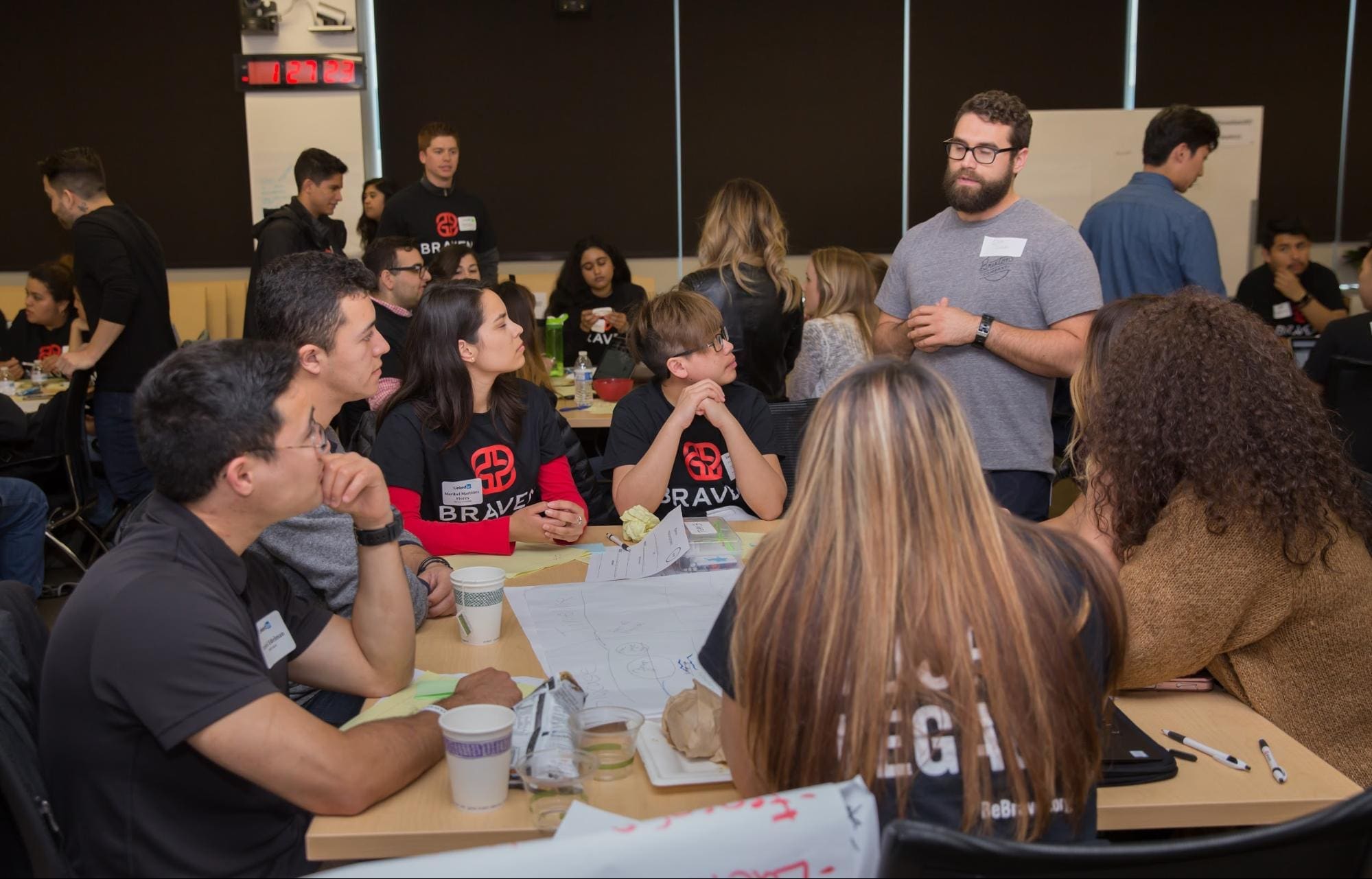 The Hackathon was described to me as a chance to do the Capstone Challenge over again, only this time condensed from an entire semester into a day-long event. It was really exciting but a little intimidating to step into the role of coach for a day with a team I had never met before.
The week before the Hackathon, I messaged my former Braven Leadership Coach, Josh, to see what advice he had on how to coach the team. He told me as a coach, it is better to ask questions than to give answers. According to Josh, “A coach’s job is to see in people what they can’t see for themselves and to help act on it by guiding them towards their own potential.” The biggest key, he said, was to step back and have faith in your team.
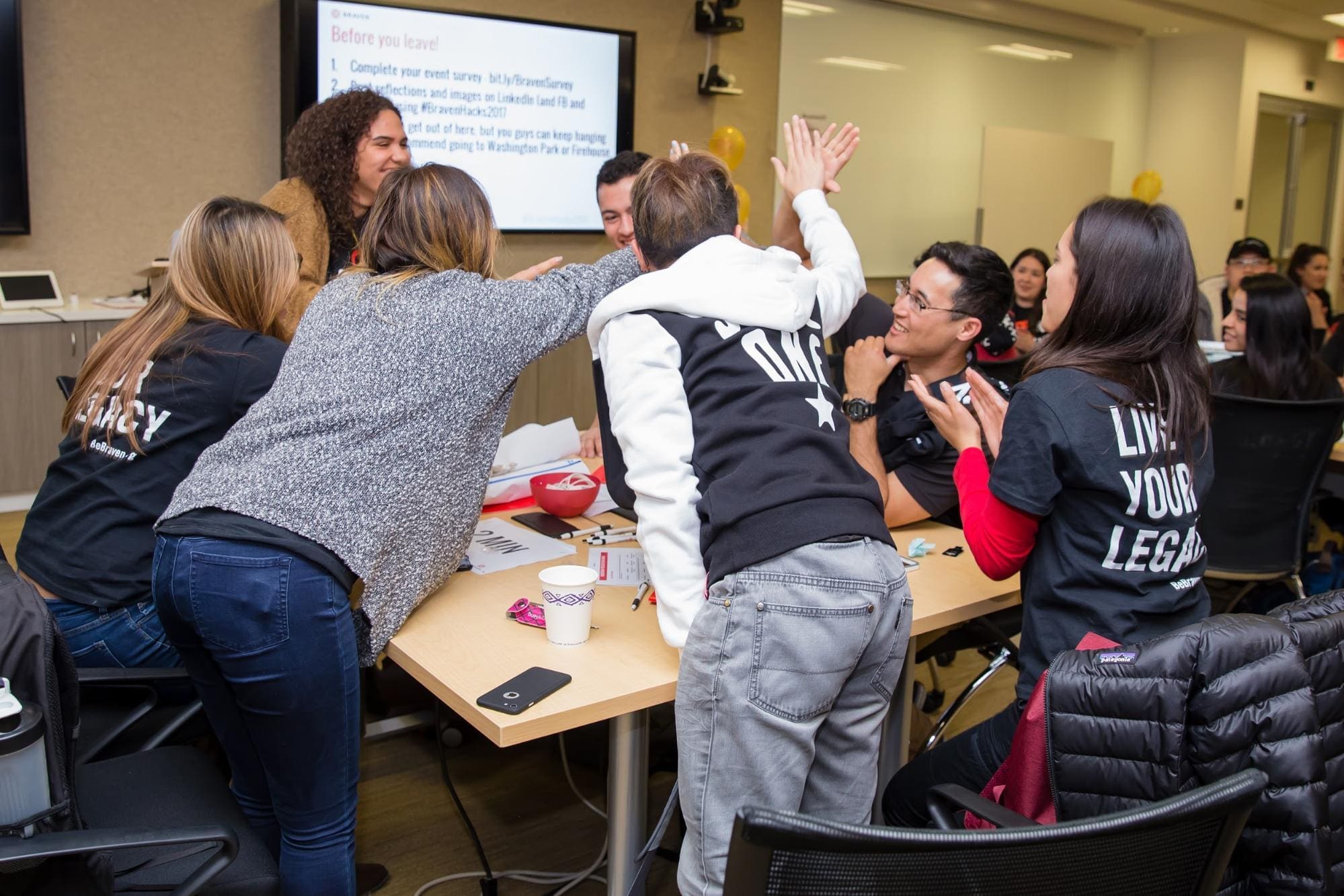 One of the things that surprised me about the Hackathon was how seamlessly the process carried over from our Capstone Challenge. Although the two scenarios were different, the same design thinking principles could be applied to tailor a solution around the problem.
We started out by approaching the problem from an outside perspective through empathy research. From there, our team broke the problem down into a statement which guided our project in one general theme. Brainstorming after that was the most exciting part of the whole process. We were handed a pile of sticky notes and were encouraged to throw as many ideas as possible onto the board. I really liked the fact that my team members were not completely fixated on their ideas and were willing to shift the entire focus of their project if they felt it was necessary. Everyone had great ideas, so it was really a challenge to narrow the focus of our project in one direction.
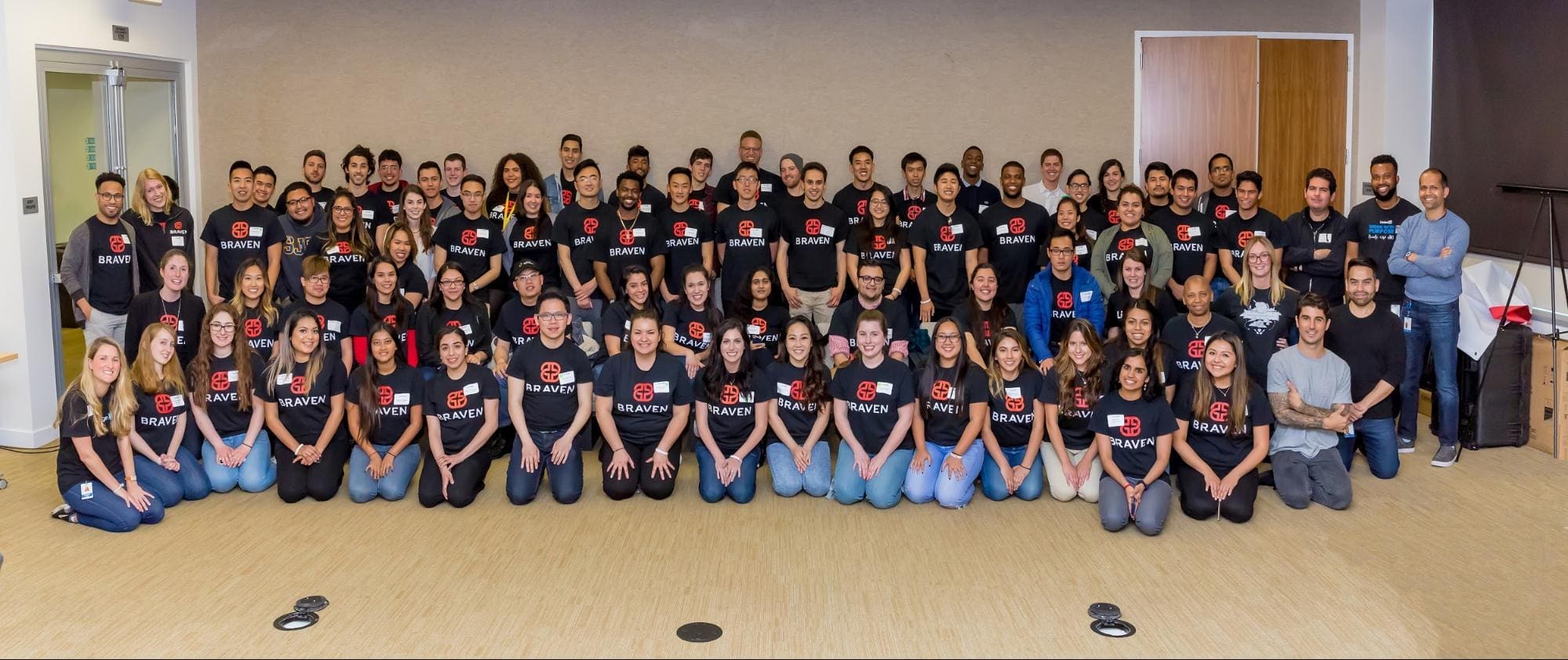 The Hackathon experience was extremely fast-paced and gave me an appreciation for being able to take a step back to reset for a moment. Watching my team start completely from scratch and tie for first place all in one day was a rewarding experience. Seeing their whole concept evolve from a whole flurry of ideas on sticky notes into a full presentation in such a short time was amazing. I had no idea what to expect walking in, but looking back, I can definitely say I would volunteer again to be a Hackathon coach!